
Built for Equipment That Runs Your Operation
Maintenance shop construction in Illinois Valley designed for fleet and equipment service operations.
You need a maintenance shop in Illinois Valley that can handle the weight of your equipment, the clearance for your largest vehicles, and the daily wear that comes from tool use, fluid spills, and constant foot traffic. Your crew works on heavy machinery, and the building around them has to match the intensity of that work without showing cracks, settling floors, or door alignment issues after the first year.
Turnkey Contracting by Gillan builds maintenance shops with heavy-duty floor systems designed to carry the load of lifts, jacks, and rolling equipment without cracking or deflection. You get high-clearance bays with large access doors that open fully and stay aligned, utility planning that puts compressed air, power drops, and drainage where your team actually uses them, and durable wall and ceiling finishes that resist impact and hold up under exposure to solvents, dust, and temperature swings. The structure itself is engineered to support overhead cranes or hoists if your workflow requires them, and the layout follows a logical flow from bay entry to work zones to parts storage.
If you are planning a maintenance facility in Illinois Valley and want to talk through floor loading, door sizing, or utility placement, reach out to discuss your project.
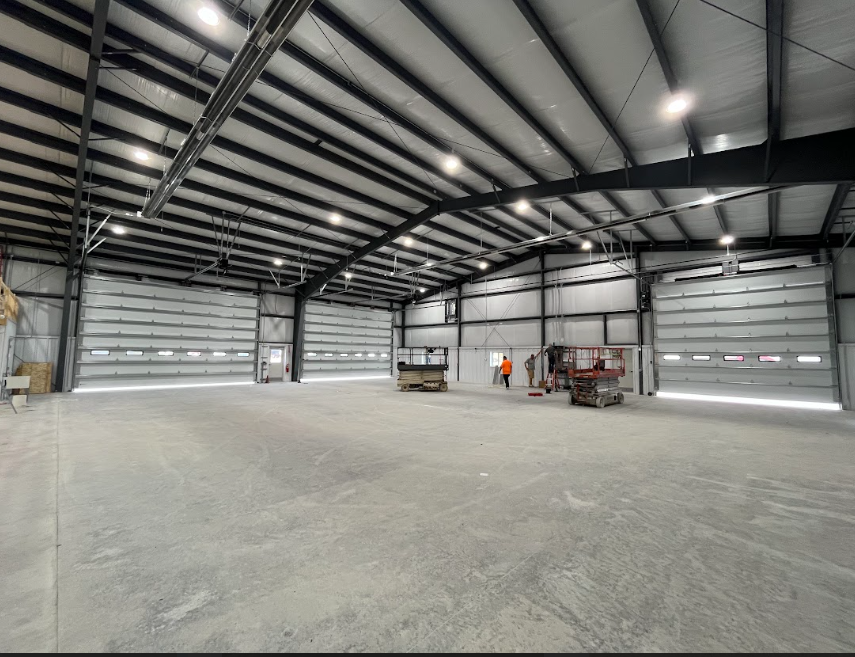
Floor Systems and Access Built for Daily Equipment Movement
Your maintenance shop in Illinois Valley starts with a structural slab designed for point loads from hydraulic lifts, tire-mounted equipment, and rolling tool carts that concentrate weight in small areas. The floor is poured with fiber reinforcement and control joints placed to prevent random cracking, then finished with a hard trowel or coated surface that resists abrasion from dragged parts, dropped tools, and steel-wheeled carts.
Once the building is complete, you will notice doors that swing or roll without binding, floors that stay level under load, and work bays with enough vertical clearance to lift truck beds or tilt equipment without modifications. Your team will have access to power and air lines mounted at bench height or dropped from above, positioned where they do not interfere with vehicle movement or create trip hazards.
The structure includes steel framing or masonry walls depending on your site and budget, insulated panels or metal siding for temperature control, and roof systems with positive drainage to prevent ponding over work areas. Lighting is mounted high enough to avoid damage and placed to reduce shadows in critical work zones. The building does not include office fit-out, break room finishes, or paved yard areas unless specified in your scope, but it does provide a fully enclosed and weather-tight shell ready for your equipment and crew.
Most questions come down to load capacity and layout
Owners planning maintenance shops usually ask about floor thickness, door width, and how utilities get routed without creating obstacles in the work area.
Once permits are issued and your site is cleared, construction in Illinois Valley usually begins within two to four weeks. Foundation work comes first, followed by framing, door installation, and roofing before interior utility rough-in.
Turnkey Contracting by Gillan works with fleet operators, municipal maintenance departments, and private equipment owners across Illinois Valley who need buildings designed for the reality of daily equipment service. If you want to discuss your project and go over site conditions, floor loading, or door configuration, get in touch to start the conversation.